Damnation (1988) & The Girl with the Needle (2024)
"I like the rain. I like to watch the water run down the window. It calms me down. I don't think about anything. I just watch the rain"
Dissecting these films has been difficult because to watch and appreciate both of them, you must experience them. Mere words fall short of capturing the sheer provocation these cinematic works evoke. They are different in theme but similar in conjuring a sense of despair and portraying the decay of humanity. In both films, an onus is placed on the audience to consume the work, sit with it, and pause with it. Actively participate even when it feels as if the films linger and alter time.
Damnation (Karhozat)
Directed by: Bela Tarr
Rated: 15
Damnation (1988) is slow-burning visual poetry that follows Karrer, a lonely drifter who fixates on a nightclub singer. The experience of watching this film embodies isolation and existentialism. As the hypnotic long shots move throughout the black-and-white world of Damnation, a less conventional narrative plays out and, more accurately, a visual descent into moral ruin and emotional trauma.
Trapped in cyclical inertia, the story, on the surface, sees Karrer come to an inevitable fate of solitude after pursuing the nightclub singer of the Titanik Bar. Sinking to desperate measures to rid himself of The Singer's husband, his romantic obstacle, Kerrar becomes embroiled in a smuggling job and convinces The Singer’s (her official character title) husband to take on such a job. Despite taking the job, Kerrar fails to act on opportunity and passively falls victim to his ‘fate’ and inevitable spiral that ends in a surreal and harrowing end where he loses his humanity.
That is the story on the surface; however, underneath, an apocalyptic future is presented to the audience, one that shows humanity in the most grotesque ways. An unmotivated narrative that lingers and haunts the screen forces us to watch decay consume the unnamed place. Despite a recognisable setting, Tarr creates a surreal and post-apocalyptic world in Damnation, through disintegration and texture. Rain is not just a backdrop but an active participant in the film’s atmosphere and a metaphor for Karrer's inner deterioration. It consumes the environment. The rain erodes, creating an unflinching textural canvas.
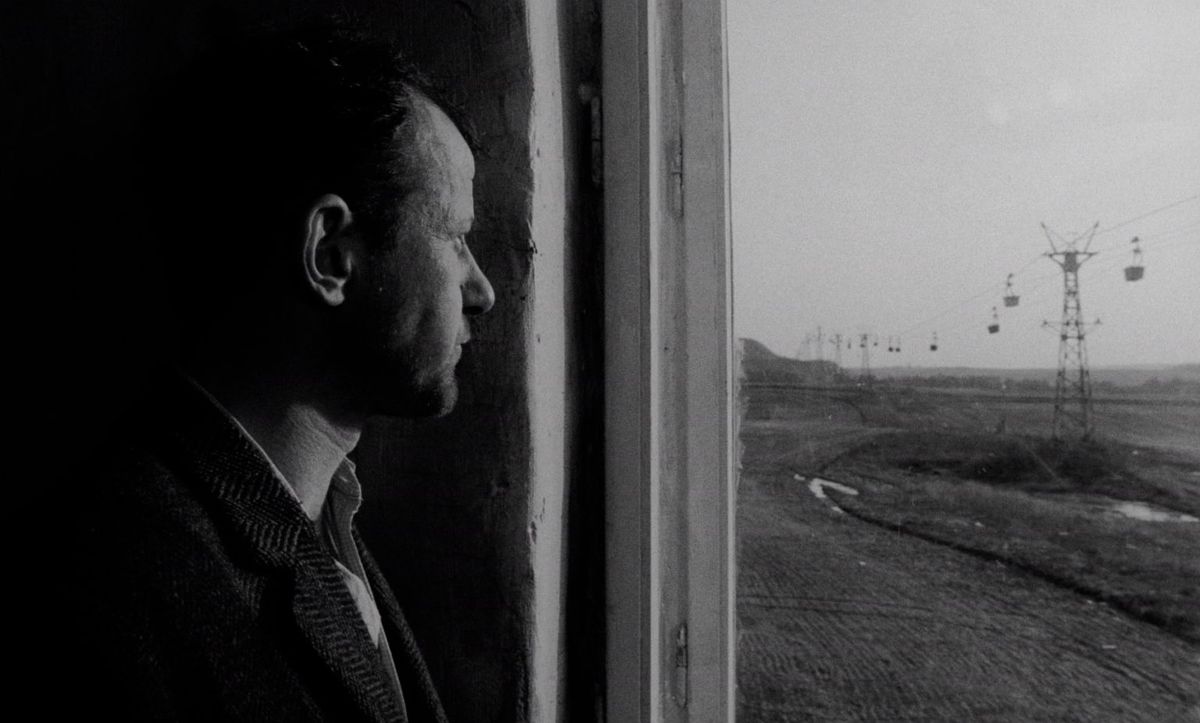
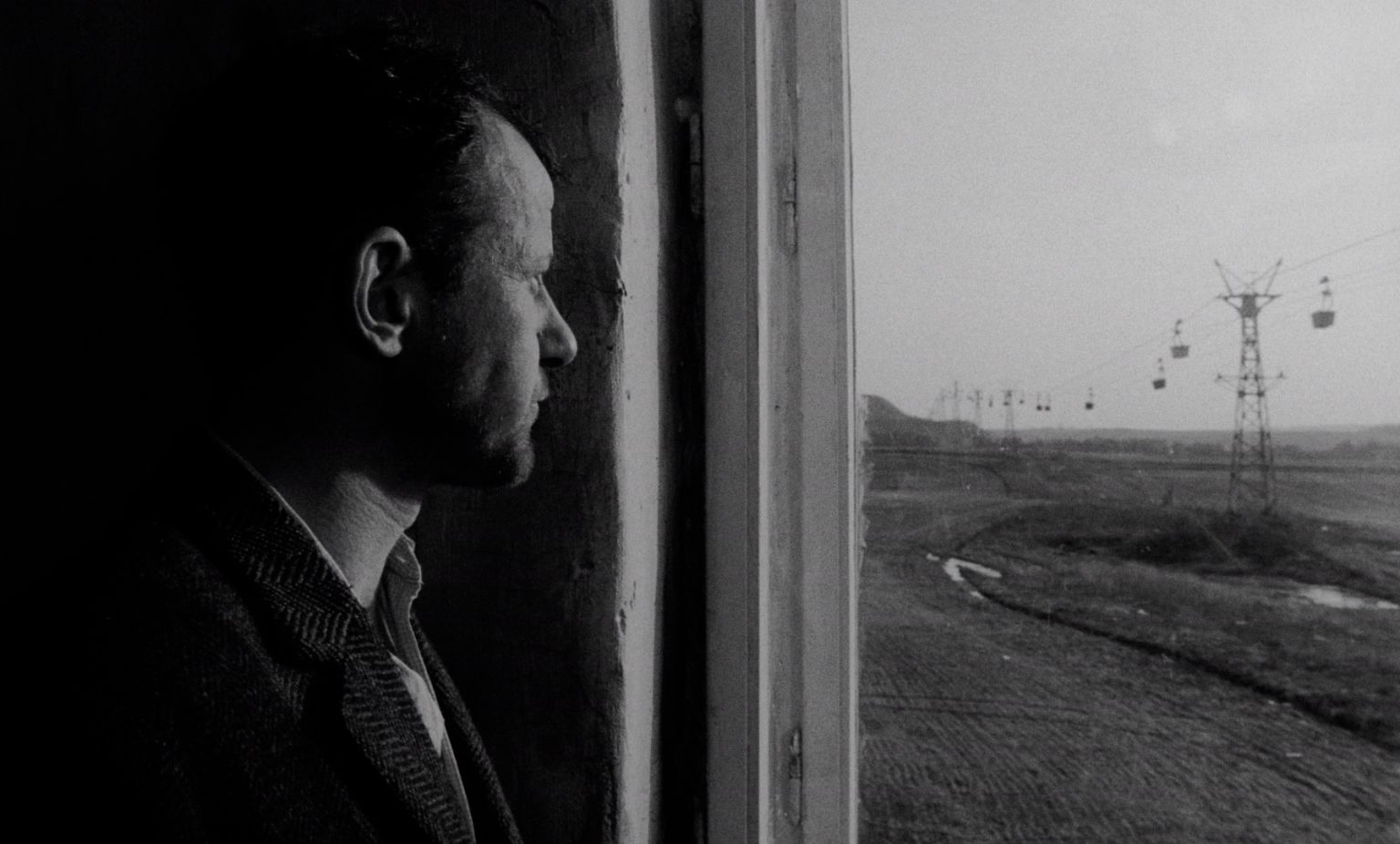
A major theme that anchors the film is the lack of agency and acceptance of fate. Karrer is at the focal point of the audience's journey through the narrative, but he is not a traditional protagonist or autonomous enough to become an antagonist. In a scene where Karrer sits by the window and talks with ‘The Singer,’ he states that…
“I sit by the window and look out totally in vain. For years and years I’ve been sitting there and something always tells me that the next moment I’ll go mad. But I don't go mad the next moment and I have no fear of going mad. Because fear of madness would mean that I'd have to cling to something.”
Karrer knows deep down that his fate of non-existence is something he cannot truly impact. His vocal longing for ‘The Singer' is not genuine. It is obsession without steadfast commitment. He is an unmotivated and passive vessel, and his actions do not impact the narrative. He meanders through the scenes with an aimless purpose, which is echoed in the cinematography.
Tarr is known for long takes, similar to the likes of Tarkovsky; in fact, there are a lot of similarities between the two filmmakers and their body of work. In Damnation, however, the camera is not searching for meaning but visualising the erosion of existence. To break away from disinterest in Karrer’s movements, the camera loses focus and drifts throughout Tarr’s world without purpose and unmotivated. This type of work brought me to Tarr’s body of work. Long takes have become a gimmick in films today, a fad, unnecessary but used for some faux reputation. A long take means nothing if it is a gimmick; however, in Damnation, for example, the camera movement visually mimics the essence of the film. The camera tracks across spaces and challenges the viewer to confront stillness and longing. A scene epitomising the film is the tracking shot that starts focusing on concrete texture on a wall, with rain travelling down like a vertical river, moving and gliding around the texture. The camera begins to track, and each opening in the wall reveals people being consumed by water, the rain relentless, but they are still. Time for them has stopped as they, like Karrer, accept their fate. They do not attempt to seek shelter or alter their bleak surroundings…they simply exist without hope.
In this one-shot, the textural richness of Tarr’s work and the camera work are on full display, accumulating together to inform and immerse the viewer. In keeping with the film, Karrer is lost and not in sight—unimportant.
I have yet to explore all of Tarr's work, but from what I have experienced to date, Damnation is the most haunting. The film demands patience in the viewer that contradicts the now. It raises questions about the "rules" of cinema with unmotivated camera moves and decisions that would reject and argue with "filmmaking guidebooks." It makes you consider film differently and provides an unnerving courage to create more work against the accepted "rules. In our instant cultural climate, where everything in the mainstream is fast-paced and driven by CGI spectacle, Damnation is a testament to the power of stillness. The film breathes, waits, and weighs down upon the viewer, forcing thought and ideation. Within that space, in that patience, there is a lingering honesty about the deterioration of human nature.
Damnation was an immersive experience, and I am sure there are elements philosophically crafted on screen for minds more eloquent than mine, but I came away with an admiration of the commitment shown from the first to the last frame. As a practitioner, it is this type of work that inspires and makes me question what it is to make a film. . . that can only be positive to help me develop. . . or perhaps, like Kerrar, I am simply a puppet to my already decided existence.
The Girl with the Needle (Pigen med nalen)
Directed by: Magnus von Horn
Rated: 15
This is an entirely different film from Tarr’s work above, but for me, there was an inescapable overlap between both bodies of work. Despite being worlds apart narratively, both protagonists exist in cycles they cannot break from. Von Horn, however, creates a more motivated narrative that frames Karoline's journey deliberately and, at times, desperately.
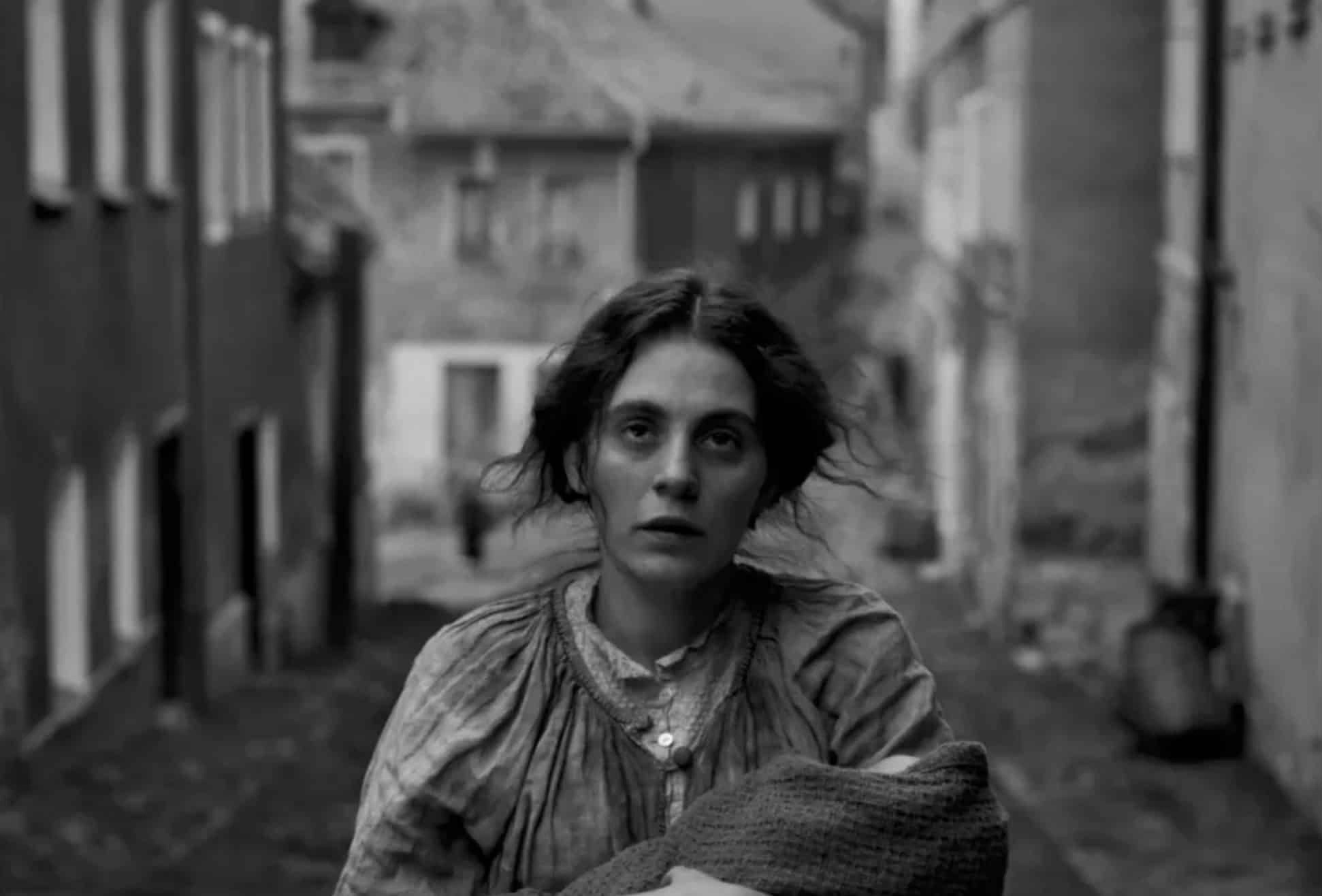
The Girl with the Needle is based on the actual historical case of Dagmar Overbye, a serial killer from Danish history between 1913 - 1920. Through the guise of an adoption service, Overbye was responsible for the deaths of several infants. As depicted in the film, she preyed on the vulnerable and desperate, and through the eyes of Karoline, the viewer is subject to Dagmar’s manipulation and cruelty. The film follows Karoline surviving in post-World War One Copenhagen. Following the presumed death of her husband, Karoline falls for the charm of her boss and falls pregnant. Rejected by his much wealthier family and the shock of her husband returning physically and internally maimed through war, Karoline’slife falls into one of desperation and struggle. Taking the most extreme decision to end her own pregnancy, her efforts are interrupted by Dagmar. Initially charismatic and kind, Karoline becomes entangled in Dagmar’s world until she stumbles upon the horrifying reality of Dagmar’s actual work. We are forced to watch the pearls of this evil through the helpless lens of Karoline as her power, agency and strength are stripped away from her.
I went into this film ignorantly, falling naively tones of black and white and the cinematography that swept across the Mubi trailer. The trailer had a Lynchian quality, making me want to watch it. I was unaware of the historical narrative the film was based on. This ignorance was a blessing as not for a long time has a film made me sit bolt upright in shock and physically respond to what I saw on the screen.
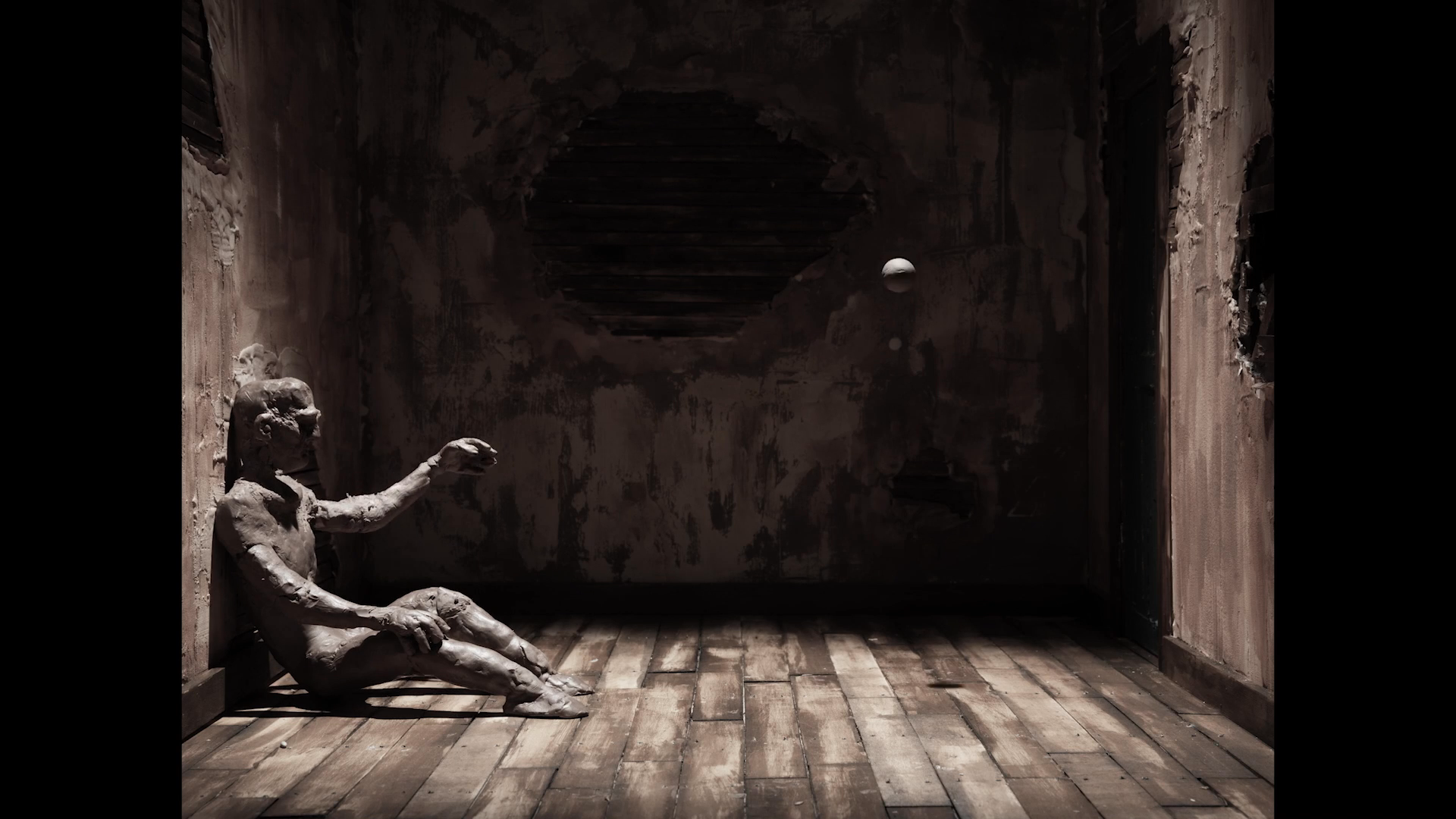
As the film opens, we are met with a haunting display of light and shadow, with faces projected and warped staring out of the screen. As if breaking the fourth wall, the characters in this narrative stare out from the screen, bulging, twisting and merging in front of the viewer's eyes. There was something incredibly haunting that I could not break focus from. It proceeded the film, yet told the emotional journey the characters were about to embark on and how their lives would become interlocked. It was twisted almost Cronenberg-esque but merged with multiple eyes and details staring at me, all sculpted through light and shadow.
I don't see an easy way to explore this type of theme other than through the lens of Karoline; until the point of meeting Dagmar, we get to examine the brutality of the world she is navigating. This opens the dialogue and allows an understanding of the desperation and despair that is felt by the protagonist, and through that empathetic relationship, there is an understanding of how Dagmar can manipulate and twist. If the film were to start with Dagmar, it would be too difficult to watch; there would be no investment other than to understand the horror of these human actions. How The Girl with the Needle creates the world, the audience is left embroiled in the evil of Dagmar's action, and we must stay, at the very least, to understand how Karoline survives.
Unlike the movement in Damnation’s camera work, The Girl with the Needle is at its best when the camera is still. Forcing the viewer to take a position within the frame and watch. Each frame is composed through light, with characters cast in half-shadow or framed within doorways. Each shot is oppressive, whether inside tight fitting and bleak interiors or the exteriors consumed with industrial smoke, claustrophobic atmosphere or tight alleys. Nowhere is there space to be free. This aesthetic stillness functions as both a formal and thematic device. Time stretches in von Horn’s world, and so does suffering. Moments that might be cut away from in another film are extended, forcing us to remain uncomfortable with Karoline. A recurring motif in the film is the threshold—doorways, windows, and the border between light and dark. These spaces become metaphors for Karoline’s psychological state: perpetually caught between one kind of enclosure and another, between knowledge and denial.
The Girl with the Needle is haunting, and the film masterfully forces the audience to watch with an unrelenting gaze. Von Horn crafts a world where horror is embedded in the mundane, where exploitation operates through the veil of softly spoken voices and gestures. There is no play to the gallery, no exaggeration — just a slow, inexorable surrender to the machinery of cruelty. This is a film that understands how violence often arrives cloaked in necessity and how systems make monsters not with force but with silence. I was not left with shock at the end, nor fear. It was an overwhelming sense of silence. As the credits ended the film, I sat and looked at the screen, catching my reflection in the monitor. The film succeeded in bringing my attention to such times. It made me feel numb but perfectly, it made me reflect.
Both films reviewed above are certainly not for an entertaining Saturday popcorn night; perhaps there are better options for your date night. However, for me, they are what cinema is truly about - not only did they inspire me to tell engaging and essential narratives, they made me think. There is no catharsis nor offer much hope in the end, but they explore a critical message that transcends both narratives. Art and cinema should make us think and should be more than an enjoyable luxury to which we have become accustomed. It is a way to confront the darkness and open difficult dialogues - not to offer questions or talk down to the audience with pretensions and on-the-nose social commentary. Instead of embracing human nature's problematic and darker side, frame it beautifully and embody that darkness so that we, the audience, can reflect and grow from the experience.
Before I wrap up this review I want to leave with some words I found in the book that came with Bela Tarr’s work - not to offer up any commentary or observation but to simply throw it out there and let it sit with you. A quote from Tarr himself;
“I began understand that the problems were not only social; they were deeper. I thought they were only ontological. It’s so so complicated, and when I understood more and more, when I went close to the people… afterward, I could understand that the problems were not only ontological. They were cosmic.”
So if you get a chance I would recommend both films when you are in the right frame…if you are here - thank you for reading. If you have seen these I would love to hear your thoughts, what did you think?
Until next time!