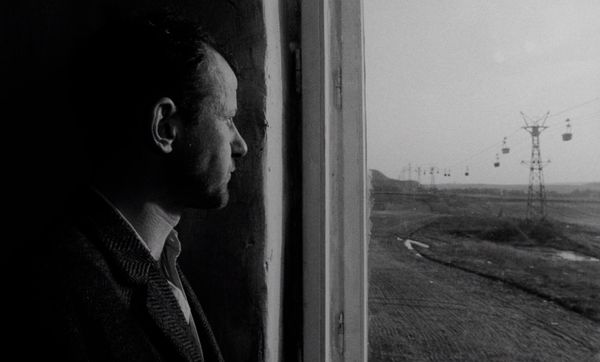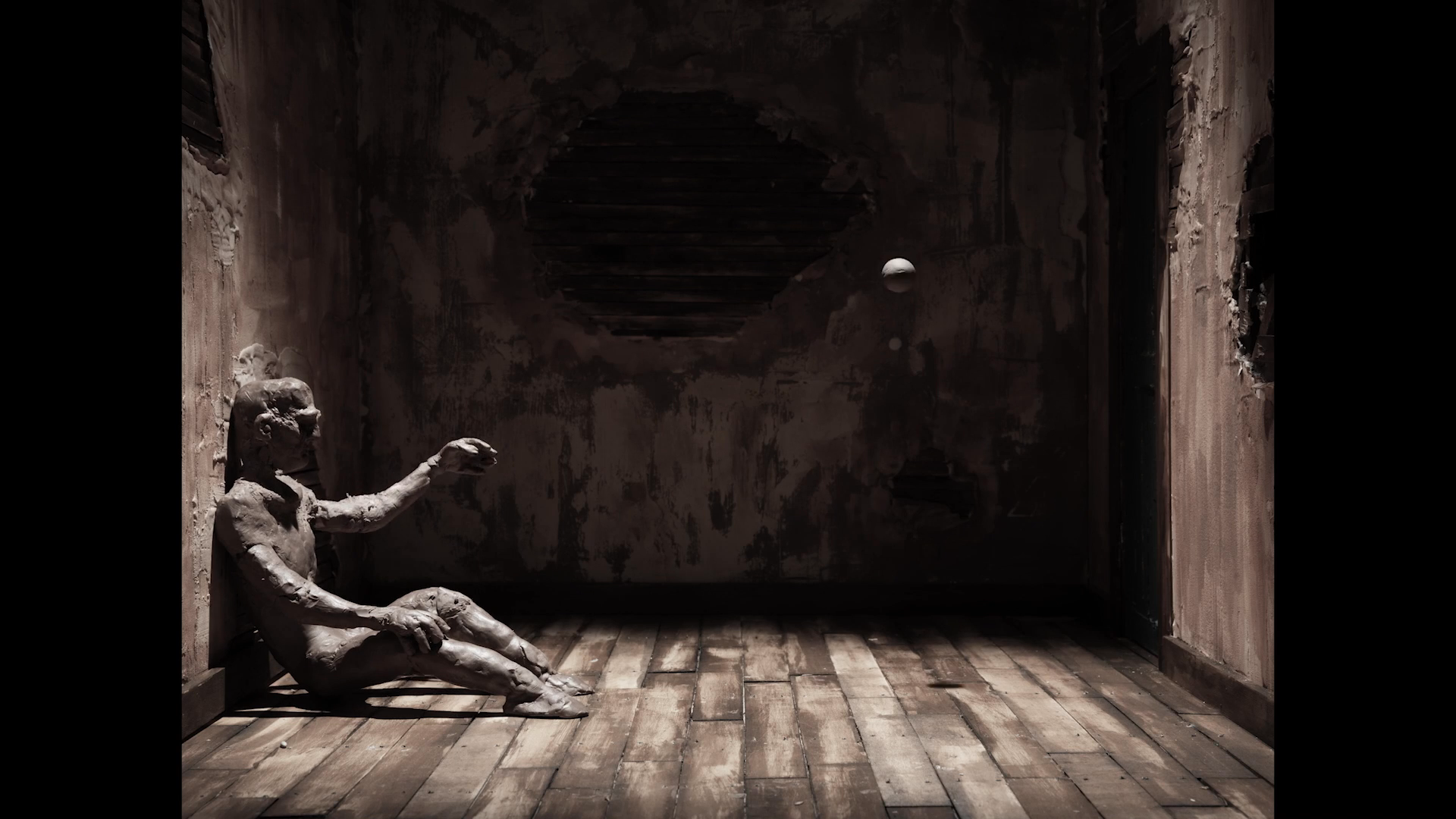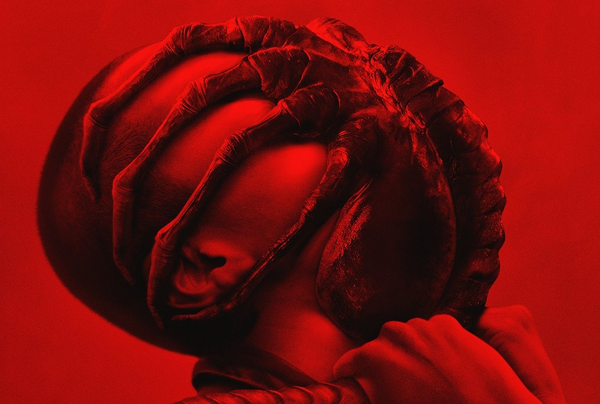
Nosferatu (2025) & The Witch (2015)
"I am an appetite. Nothing more"
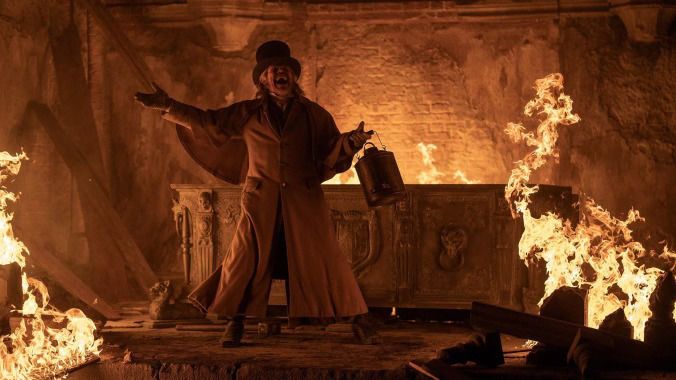
To kick off my 2025 year of film reviews, I’ve started with a double feature from Robert Eggers. His latest release, Nosferatu, and his debut feature from 2015, The Witch. A pair of films that complement and harmonise with each other, allowing for a haunting and stylish start to the year. Lets jump right in. . .
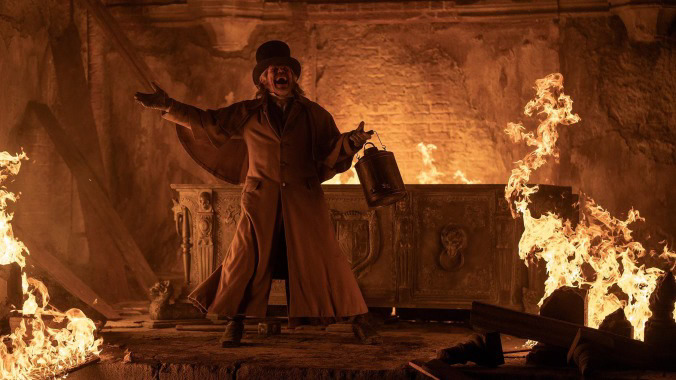
Nosferatu
Directed by: Robert Eggers
Rating: 15
Articulating my thoughts in this review is a challenge, particularly when coming to terms with whether or not I felt this film was a success or not from my perspective. Visually, it is a grotesquely beautiful work of art, haunting with meticulous design and the sound that accompanies the visuals steals the show. Yet, since watching it, I can’t shake the feeling akin to Ellen’s pull towards a soulless entity - curious, compelled, but ultimately left hollow. The film is not bad. During my experience in the cinema, I was hooked from start to end, but there’s an ineffable quality, something out of reach that feels absent.
Robert Egger’s Nosferatu (2025) is a reimagining of the 1922 silent film by F.W Murnau. While retaining the narrative structure of 1922, Egger expands on the psychological depth and gives the character of Ellen more autonomy to drive the plot. Set in 19th Century Germany, the film follows Thomas Hutter (played by Nichola Hoult), a real estate agent, as he travels to Transylvania to finalise a property deal with Count Orlok (Bill Skarsgard). Driven by an obsession with Hutter’s wife Ellen (Lily-Rose Depp), Orlok looks to move to Thomas’s hometown and seduce Ellen while bringing disease, death and devastation to the locals.
Nosferatu was at its best during Thomas’s visit to Orlok’s castle. The tension and fear were heightened, and the mystery behind Orlok was maintained. The sense of pure dread and evil was at its most intense during the early interactions of Thomas and Count Orlok. The Count was always kept in shadow or out of focus, allowing the audience to experience the same space as Thomas.
A big part of the success of the castle scenes, was the way in which Count Orlok’s true form was concealed. Orlok’s form is slowly unveiled in parts, a close-up of eyes or a hand coming from off-screen. The fear and dread are unveiled through Thomas's reactions; as an audience, we can only imagine what he is seeing. However, once Orlok’s physical form, while scary and eerie, was given a presence on screen, that dread was somewhat diminished. The power of suggestion, of what lies in shadow, was much more successful in harmonising with the atmosphere of the setting.
The technical aspects are also allowed to have the most fun within the castle setting. The deliberate pacing of the camera work, defined by slow, methodical movements, builds a creeping tension that mirrors the inevitability of Orlok’s predatory nature. As an audience, we only catch glimpses of the Count as we are fed through the hallways and staircases of his castle, as if being hunted but never being able to settle or find a safe space. Cinematographer Jarin Blashke crafts a visual language that borrows from the chiaroscuro lighting reminiscent of the 1922 original. Each frame is full of texture and is framed with shadow as if there is a presence closing in on each shot.
Equally critical to the creation of Egger’s world is the sound design and composition that enriches the visuals and, in parts, stands up and takes centre stage. Orlok’s voice occupies the audio space whenever he speaks, invading the sound while hypnotising those who are listening. Skarsgard’s vocal performance echoes through the scene, dominating with weight and resonance. Consuming the life from the audio until only Orlok’s voice remains.
A key narrative difference in this particular adaption is the role Ellen plays and is no longer a passive victim hunted by the evil undead Count. Eggers shines the light on Ellen’s journey and reframes the sacrifice made at the end of the film from a selfless act to personal liberation and agency. In this depiction, despite the fear Orlok brings, Ellen becomes his equal, holding emotional control over the Count rather than becoming prey for him to hunt and consume.
The end of Orlok through Ellen's actions does not just bring the end of her character in a selfless act through fear; at this stage in the film, the actions are not driven by fear but by controlled and conscious thought. At different stages of her journey throughout the film, her call to darkness and her possession are met with restrictive responses by the males who surround her. Harding (Aaron Taylor-Johnson) is being advised by Dr. Wilhelm Sievers (Ralph Ineson) to tie Ellen to the bed if she becomes too distressed, an example of such restrictions. Eggers allows Ellen to break free from this societal reaction, and her sacrifice serves not only to vanquish Orlon’s evil but also to symbolise her transcendence of the societal and existential constraints that challenge her throughout the narrative.
Concluding my thoughts on this film, though, to reiterate, my starting challenge was difficult as I came away from the film impressed and slightly underwhelmed. There was something missing for me. The pace in parts felt hurried, especially once the Count had left his castle, or perhaps it was that I was already a customer to the narrative that there was no significant change that left me to ponder. Eggers borrows a lot from the essence of the 1922 predecessor, and I could not help but see Coppola’s 1992 Dracula throughout sections of the film, and it felt, in parts, like I had seen it before. Perhaps that is simply it. My introduction to Eggers' work was The Lighthouse, and this was an opportunity to bring that level of originality and detail to change the way in which audiences viewed Nosferatu. However, in the end like Count Orlok himself, it felt in parts soulless, a soulless vision of immense grotesque beauty. . .
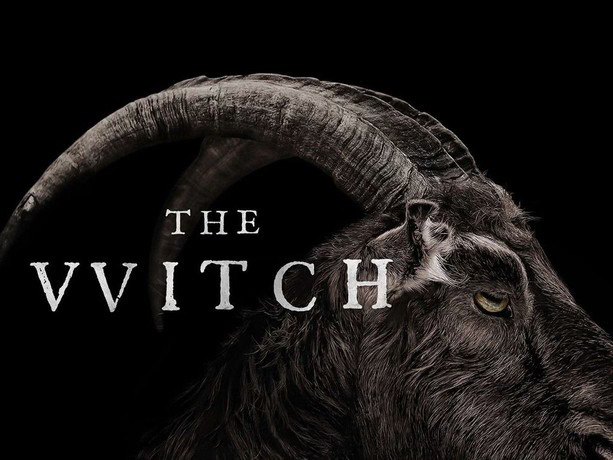
The Witch
Directed by: Robert Eggers
Rating: 15
It is easy to write this review. To put it simply, I loved every second of this film, and unlike my Nosferatu experience, I was left thinking about this film long after the credits rolled. The way Eggers constructs the family dynamic in The Witch gives the film a heart, albeit a broken and traumatic one, but a heart nonetheless. Set in 1630s New England, the film follows a devoutly religious family exiled from their community and forced to live on the edge of a vast, foreboding forest. Their fragile existence is thrown into turmoil when their infant son mysteriously vanishes, triggering a series of unexplainable events that exacerbate their paranoia. At the centre of this paranoia is Thomasin (Anya Taylor-Joy), the eldest daughter, who becomes the scapegoat (pardon the use of goat) for the family’s mounting fears of witchcraft. As isolation, suspicion, and religious fanaticism consume the family, they descend into madness, culminating in a hauntingly ambiguous conclusion that blurs the line between psychological torment and supernatural horror.
Throughout the narrative, the epicentre of the emotional vulnerability comes from the family wrestling with their faith and as events unfold, becoming increasingly traumatic for the family, that faith is questioned and tested. As a non-religious person, I find these religious relationships intriguing. Especially in the father figure, there is an uncompromising commitment to religious intervention that things will improve, yet with each complicated arc of the film, the family are left powerless against forces outside of their comprehension.
Isolation plays a significant role within the film and becomes the narrative's central theme at various levels. Being banished from their settlement, it becomes clear that the family is literally isolated from humanity. Left alone with their own reflections and sins that they must face up to or hide from. The home the family create, in contrast to the dense forest on their horizon, feels insignificant and futile in power. The cinematography helps with this atmosphere, framed in a 1:66:1 aspect ratio; the wide establishing shots are given height, making the forest trees tower above the Puritan family while maintaining a boxed-in feel for claustrophobic interior settings.
Very quickly into their isolation, the infant son is taken by The Witch, and that is the catalyst for the family’s deterioration of both love for each other and their own personal relationship with their faith. Isolation is then portrayed through a religious lens, turning grief into paranoia and paranoia interpreted as divine intervention. Faith offers the family no comfort and only acts as a tool in which they hide from their own fears and failings.
The Witch herself, the idea of the Witch transcends being a literal character, embodies the family's isolation, and acts as a catalyst for deterioration. Unlike the second half of Nosferatu, where Orlok is presented in clearer sight, the witch in the forest is barely seen and if she is, it is often on the periphery of the framing or blurred. The Witch is less of a character and more a pervasive presence that adds to the supernatural element throughout the narrative.
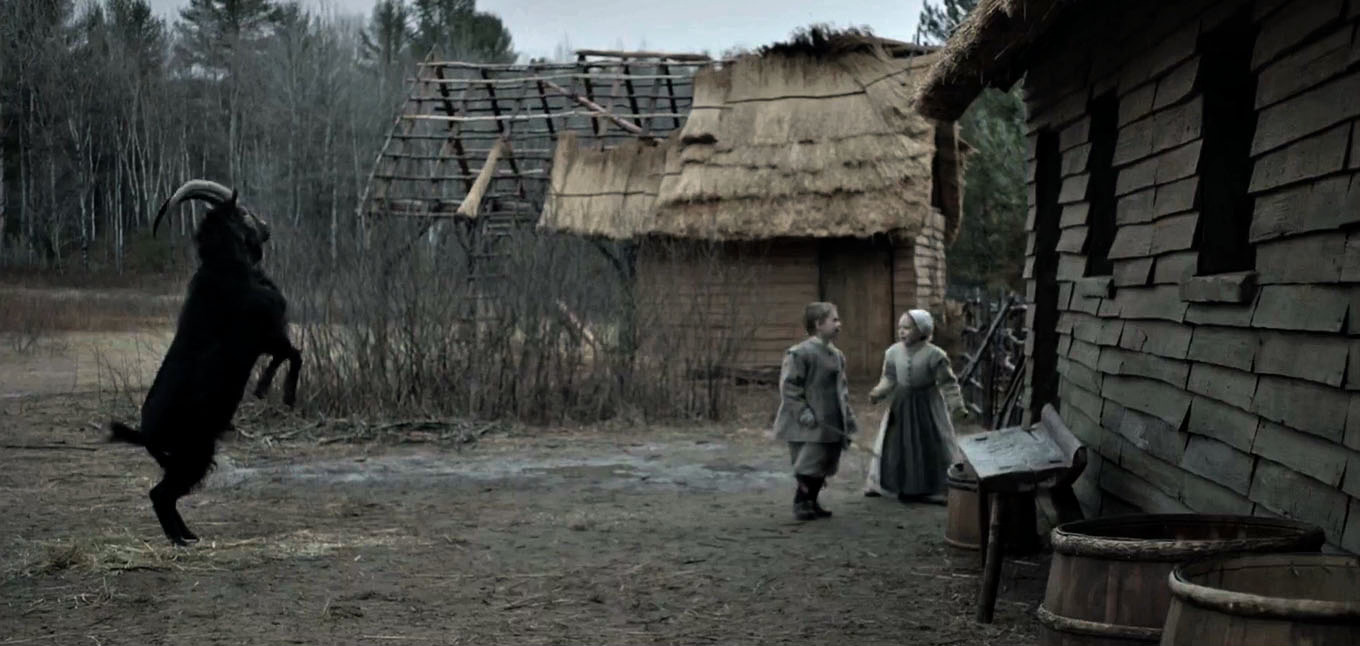
As if working in a unifying act of corruption and ambiguity, Black Philip, the goat, is portrayed as an ominous existence that speaks in secret to the younger siblings. His appearance often coincides with a breakdown in family relationships, each time becoming more intense and violent.
Through the character of Thomasin, we witness the breakdown of the family altogether, and she becomes isolated and accused of witchcraft. Visually throughout the film, the framing of the family in a shot often physically isolates Thomasin, empathising with her estrangement from her family. Her final experience of isolation reaches the extreme when her entire family dies, leaving her with the only choice but to confront her own fear in the form of Black Philip.
Similar to Ellen’s liberation and agency in Nosferatu, Thomasin’s arc follows a similar journey or at least a similar end. Throughout the film often in the appearance of dark animation, most notable a black goat named Black Philip, the idea of rebellion and a change to the mundanity surrounding the family. Although not the Witch from the woods, Black Philip is certainly linked through the supernatural and, in the climatic scene, he reveals his proper form in the background, seducing Thomasin to sign the devil’s book and leading her to join a coven in the forest. The final shot highlights her liberation from the restrictions of faith as we see Thomasin transcend with other members of the coven, becoming what was feared throughout, a witch.
These films are linked in my mind, perhaps due to the back-to-back nature of viewing, but I can't help but think about the overlapping themes across the narratives. Fear of the unknown and consumption of malevolent forces haunt both films. Ultimately, the protagonists learn to embrace fear, somewhat tragically, to find their own agency and liberation. Perhaps if the Puritan family had the chance to to hear the words of William Dafoe's character, Prof. Albin Eberhart von Franz, who stated, "if we are to tame darkness, we must first face that exists." they would have faced their fears. Instead, they turned their back on their fear and looked for answers in faith. Both experiences rely on lingering shots and treat the audience with respect enough for them to fill in the gaps created by shadow and ambiguity.
I am a big fan of Eggers and the raw human authenticity he disseminates throughout his work. Beneath the crisp cinematography, thought-provoking dialogue and haunting soundscapes, the stories are human. The beautiful ugliness of humanity is allowed space on the screen. In the final moments of Nosferatu, as Ellen draws her last breath and Thomas mourns her passing, he grips her hand as he cries, with spittle clinging between his lips and her skin. It strips away the film and reduces the characters on screen to the core of humanity. The same can be said in The Witch, with the father of the family in drenched clothes, in the rain, and chopping wood as he comes to terms with his sins. Mundane, human and brutal. There is texture in the performances, and human vulnerability is built into the foundation of the script. That type of reality is not present in modern day Hollywood, where the reminisce of human is often airbrushed and keyed out with green screen, replaced by a digital double.
As a filmmaker, or more accurately, someone who aspires to make films successfully, there is a lot to learn from Robert Eggers. There is a lot to dissect, and perhaps this review does not do justice to the meticulous nature of his work. What is clear is that he is uncompromising in vision, and that is a lesson I want to take away. Authenticity is his signature, and even if subjectively, it might not always work, his films are made at the highest technical level.
So that is it—my first two films of 2025. I hope you have enjoyed reading my thoughts. I highly recommend both films. Let me know your thoughts if you have seen them.
Until next time. . .
“I tell you that if we are to tame darkness, we must first face that it exists!”
Thanks for reading! If you think others would enjoy this, feel free to share it.